The file is the interface. The intelligence works around it.
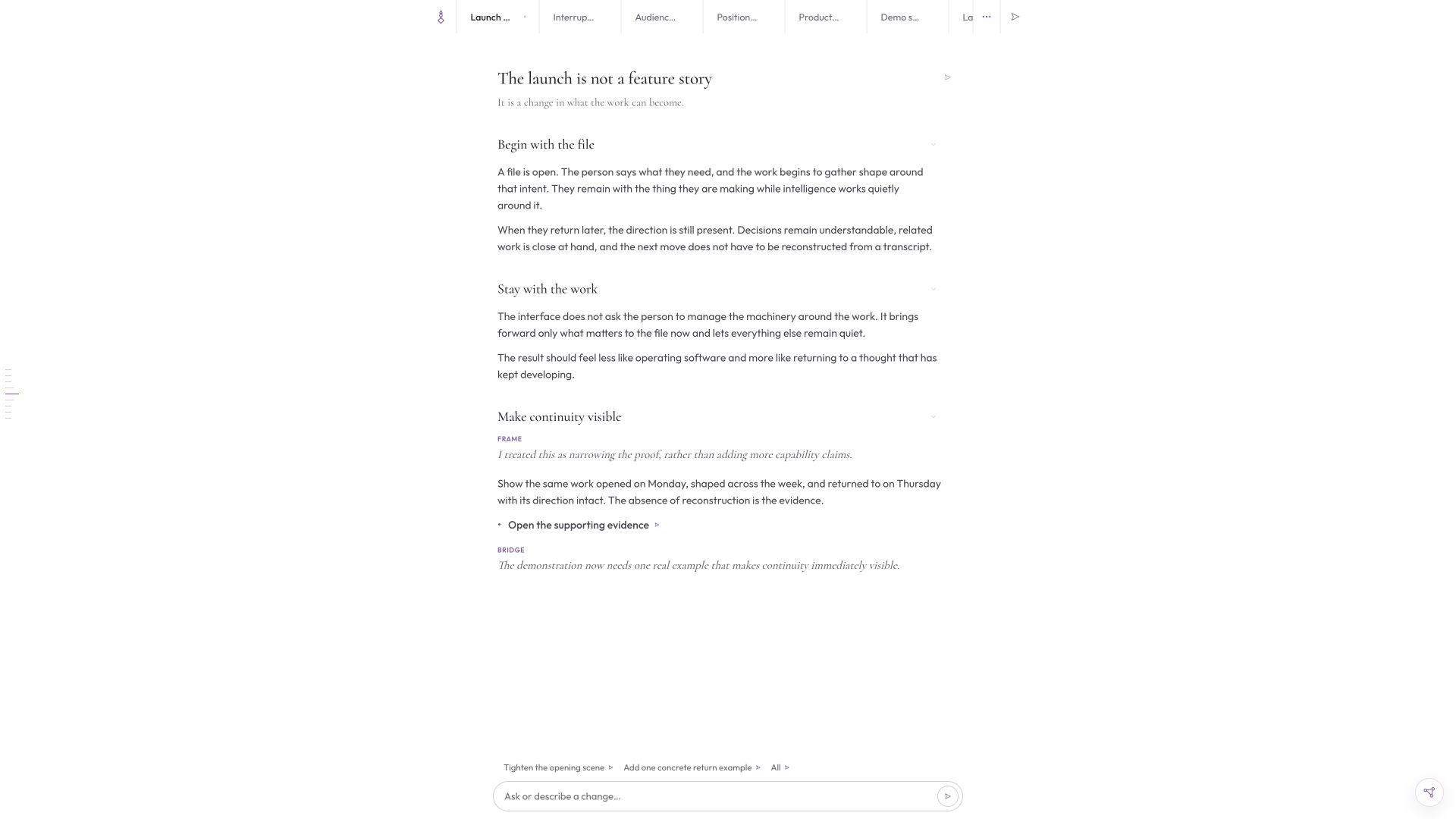
Open a Living File and stay with the work. Memory, relationships, planning, and bounded assistance appear when useful, then recede when they are not.
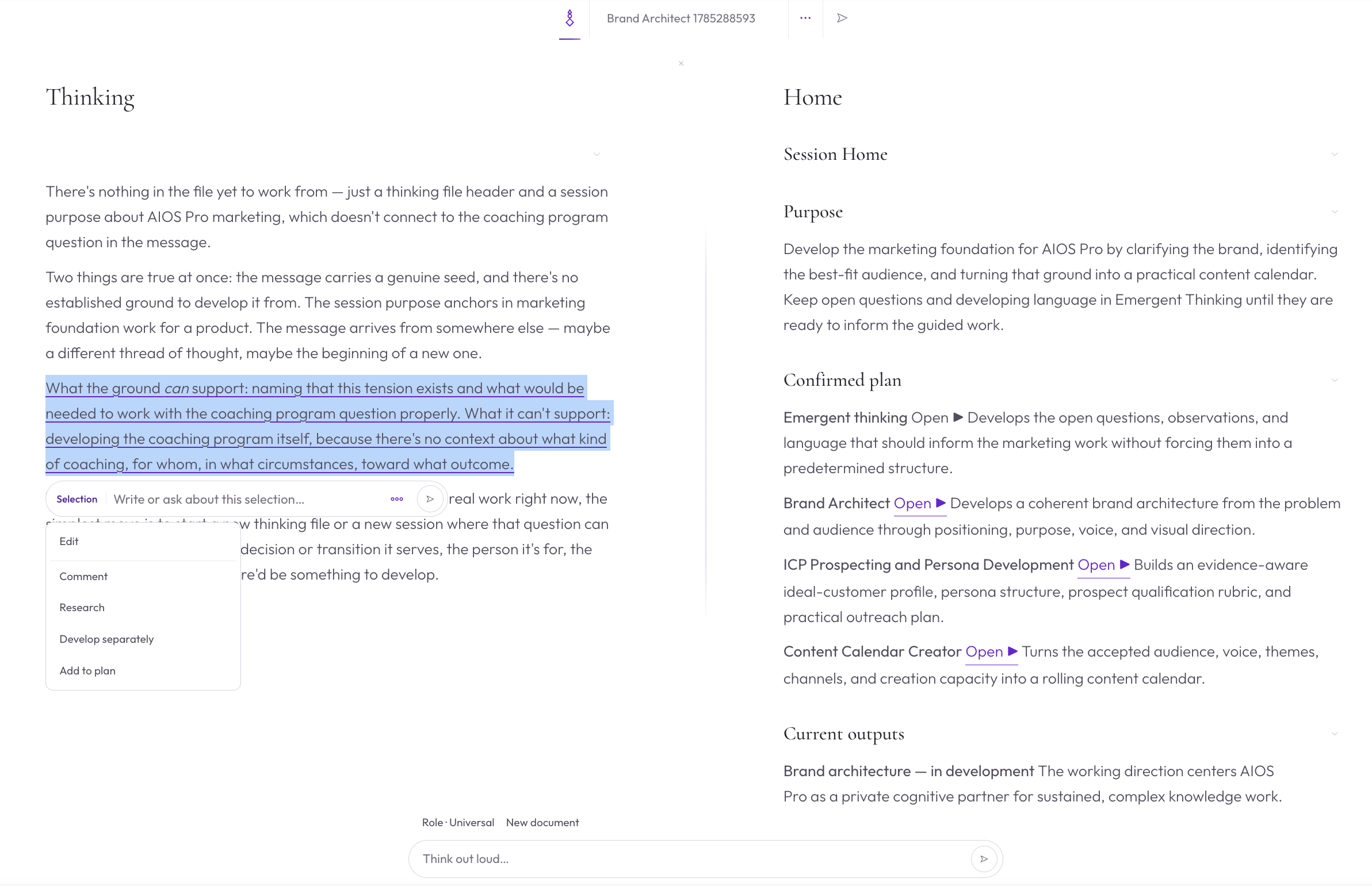
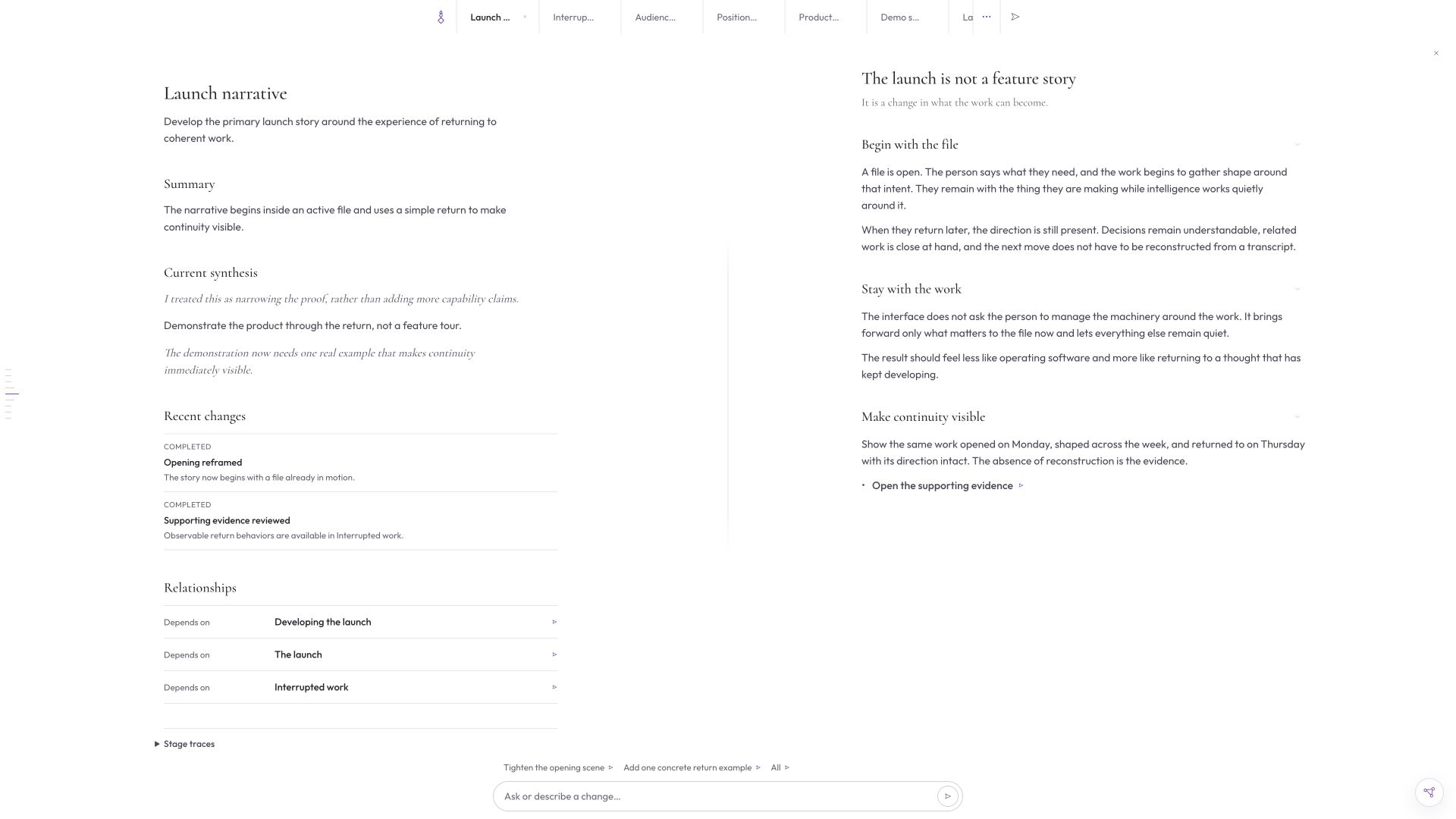
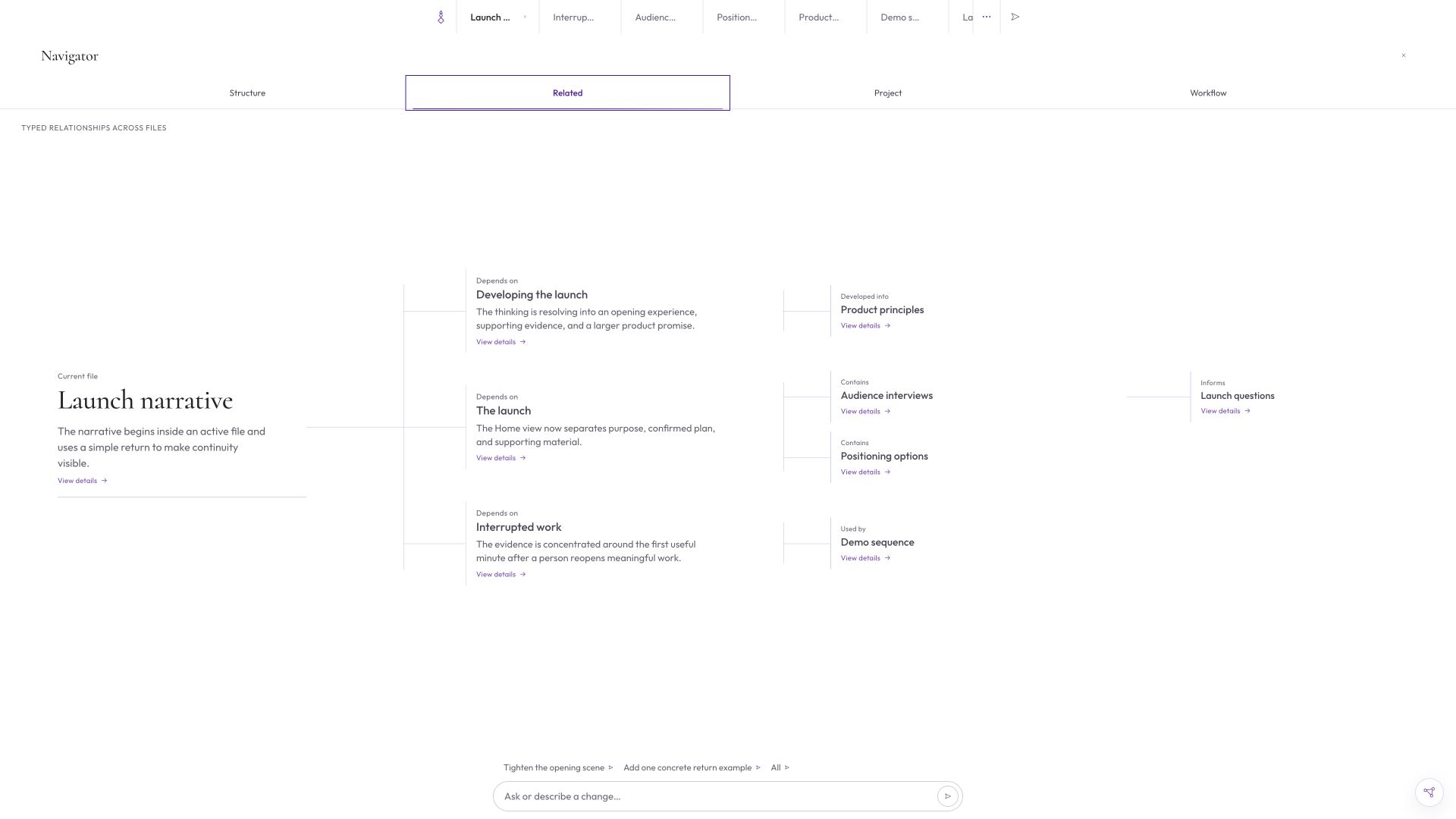
The document never leaves the centre. What changes is how much of its world is visible — the passage you are working on, what the file remembers, what it is related to, the plan forming around it, and the work you handed out.
Switch the view. The file underneath stays exactly where it was.
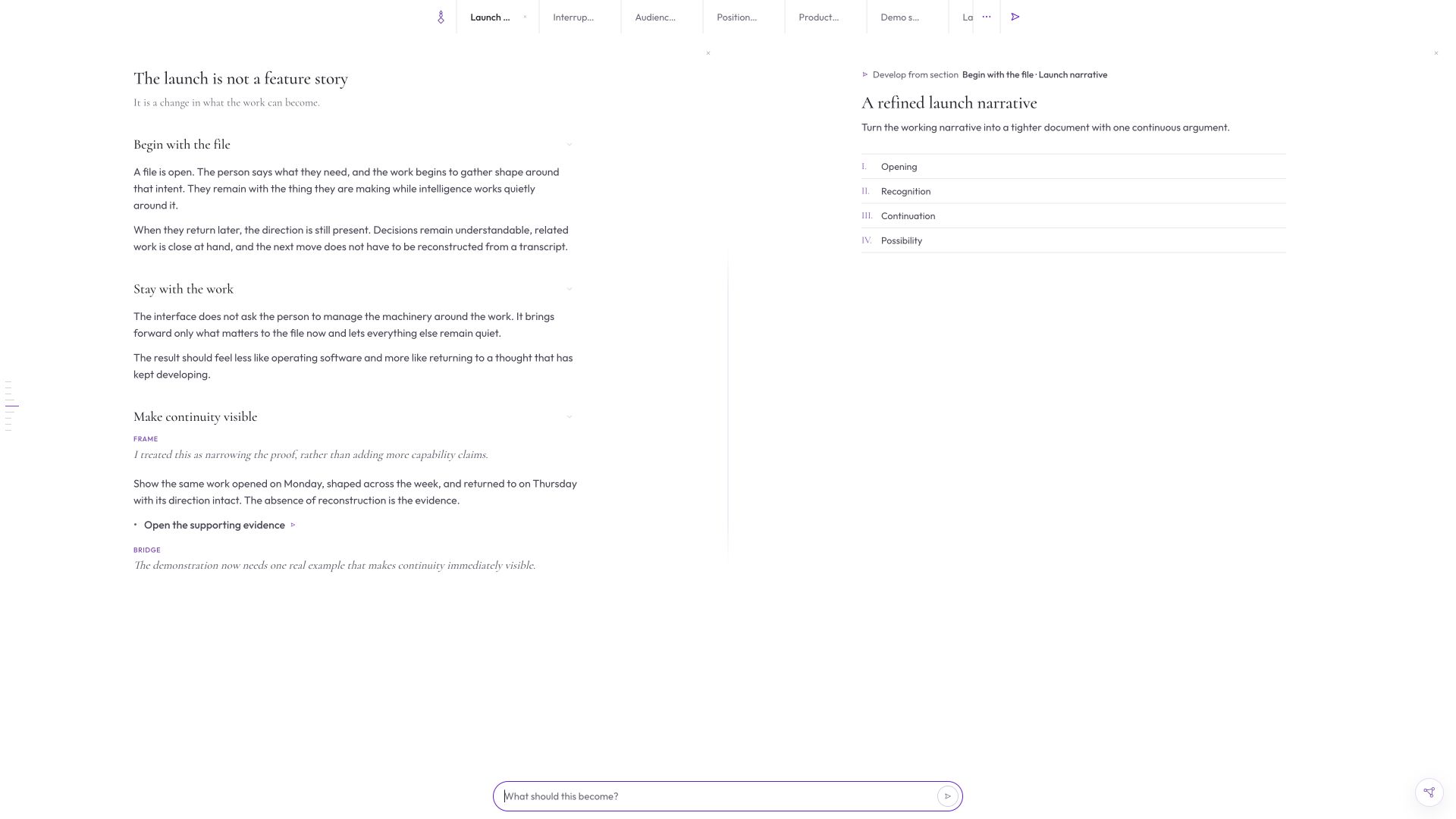
Follow the thought before forcing the form.
Begin with a question, a tension, or a half-formed idea — typed or spoken — without deciding first whether it is a note, a brief, or a draft. Useful directions surface as you go, and what is still unresolved stays visibly unresolved instead of being smoothed over.
See the structure, not just the latest paragraph.
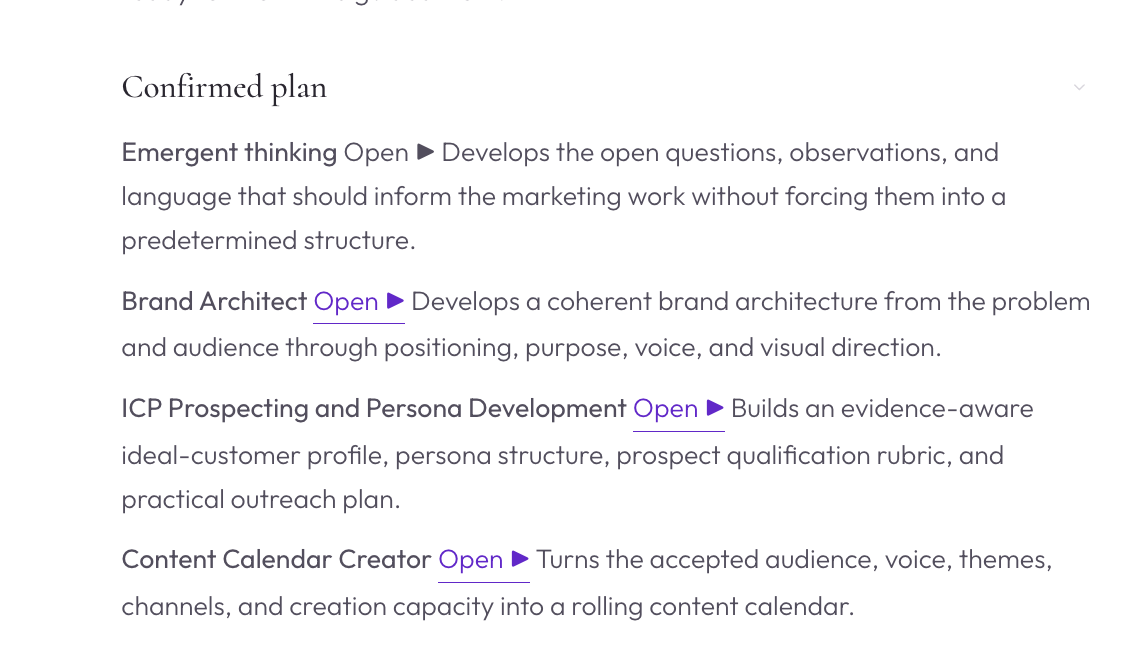
Move up to planning altitude and work on purpose, sequence, gaps, and the route through the whole piece. Then drop back into the sentence you were writing — the outline you just changed is already reflected around it.
Reopen it next week and continue mid-thought.
The purpose you set, what changed since, and the questions you left open are held beside the document — not buried in a conversation you would have to re-read. You continue from where the work actually stands.
Know what a file is before you open it.
Its purpose, what it currently says, where it stands, and what it is connected to — visible from outside. You move through a body of work by what things mean, not by guessing from filenames.
Think with me — or take this and run it.
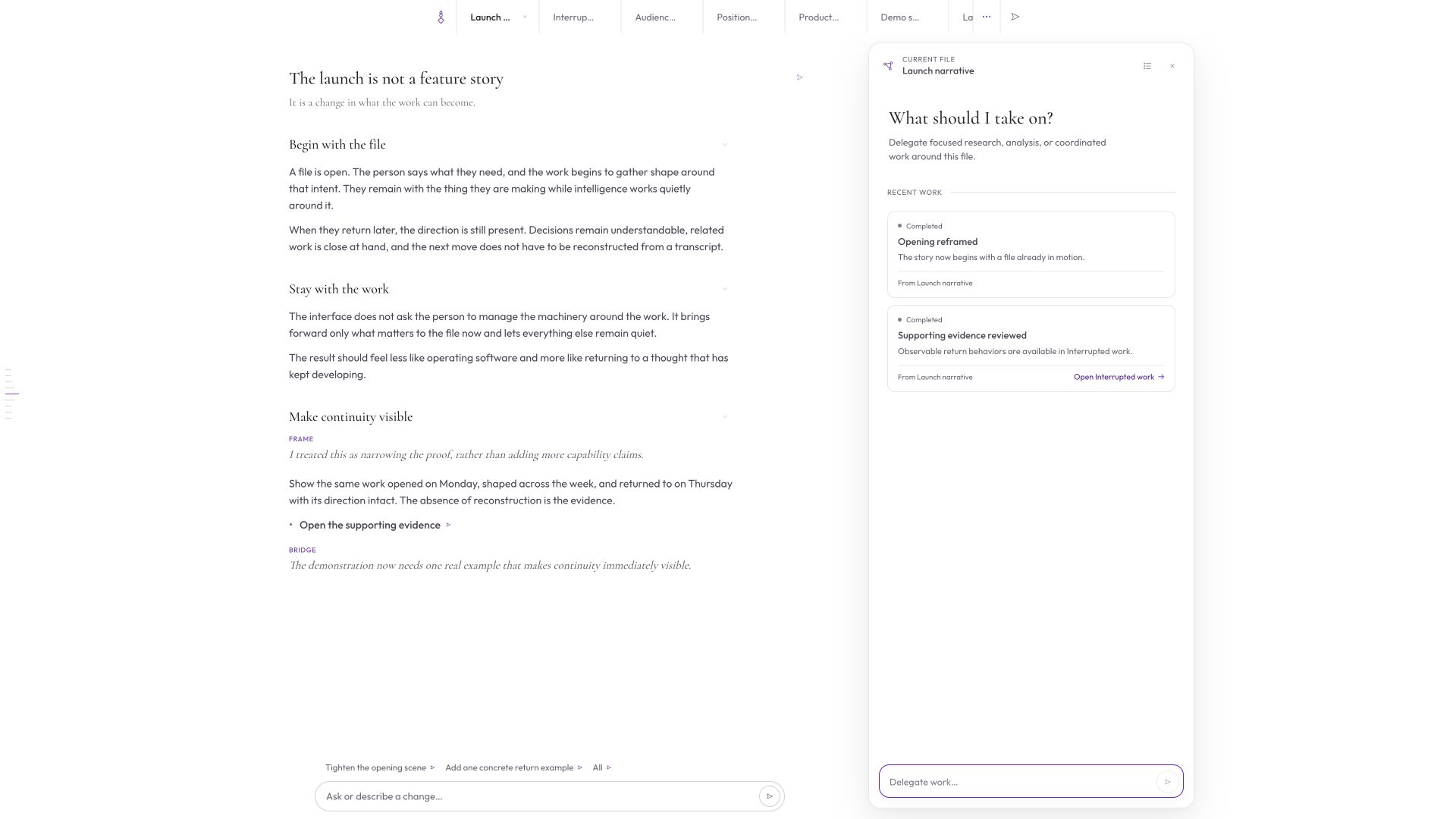
Run a guided practice, develop the material together, or hand over a bounded assignment that comes back for review. Delegated work continues while you are elsewhere, and no agent takes over the environment while it does.
Every action leaves a trace. Ask a question, accept a change, move a section, settle a decision — each one is written down as it happens, with what changed, what it came from, and what it was for. You do not tag it, label it, or file it. There is no step where you maintain any of this.
That single record is what makes the rest of it work. Memory is the record read back to you. Relationships are the record connecting two files. History is the record over time. They are not three systems — they are one byproduct, viewed three ways.
And because it is written at the moment of the action rather than reconstructed afterwards, it is a genuine audit trail: provenance for every sentence in every file, and a complete, attributable history of everything done across the whole body of work.
It falls out of the shape above — every why, how, and what, recorded at the level it happened.
What a file remembers
Your files are not a flat folder of documents. AIOS tracks how they actually relate — which one answers another, which draws from it, which supersedes it, which depends on it — and it tracks those relationships as the work happens rather than inferring them later.
So an edit can be a pinpoint. You change the sentence, not the document. The system then finds the two places that sentence now contradicts, supersedes the decision record and keeps its reasoning, rewrites the one section of the memo that rested on it, and regenerates the brief.
And it leaves the offer alone, because nothing in the offer ever depended on it.
One edit, across everything it touched
Work has two levels and you move between them. In writing you are in the sentence. Switch to planning and you are looking at the outline — the sections, their order, what each one is for — and you edit there: reorder it, move a section into another document, or lift one out into a file of its own.
Nothing is copied and pasted. A section that moves takes its history and its reasons with it. And because the plan is a real object rather than a picture of one, you can hand a piece of it out from here — one section assigned, drafted while you are elsewhere, back for review.
Then a review pass over the seams. Where sections now meet, the transitions are rewritten so the piece reads as one thing instead of parts that were moved.
This is how people worked before AI — notes, then files, then moving pieces around to see what fits. It is only the manual part that is gone.
Planning and writing, on the same file
Ask for something substantial and the work starts. You do not sit and watch it finish. Open another file and keep working — the first piece continues in the background, and it is there, done, when you come back to it.
That is what makes moving around cheap. You can have four things open, put your attention wherever it is most useful, and lose nothing by leaving, because nothing in the environment needs you present to make progress.
No queue. No spinner. No turn to wait out.
Nothing waits on your attention
The more you use it, the stronger the centre gets.
Because the same why · how · what structure runs at every level, AIOS Pro can see the patterns in how you actually work — the terms you use precisely, the sequence you follow, the objections you always raise — and offer them back to you. Approve one and it is drawn into the centre: a definition, what it relates to, the standard it must meet, the method it belongs to. Your expertise stops being something you re-explain.
This is not data piling up. What accumulates is structure — and structure is what a lean reasoning core can use. The model does not need to contain your field; it needs to reason well and read well. Specialised expertise, vocabulary and standards live locally, in files, and are composed into each turn. No training run, no fine-tune, nothing uploaded.
You do not need a frontier-scale model to get frontier-quality work. You need strong core reasoning, and everything else close at hand.
The flywheel: everything is drawn toward the centre
Your files stay yours.
Everything here is ordinary markdown in folders you chose, on a machine you control. The record is written as the work happens rather than reconstructed afterwards, suggestions stay optional, and delegated work comes back for review instead of landing finished and unseen.
The environment gets better at your work by doing your work — and you can read everything it learned.